Our Science
Biotherapeutic Characterization: Mass Spectrometry and Biophysical Methods
Whether a biotherapeutic binds its target, folds correctly, carries the expected modifications, and stays stable is determined by its molecular structure. Measuring that structure precisely is what lets a developer confirm a molecule’s identity, mechanism, comparability, and quality. Biotherapeutic characterization is the measurement of a biological drug’s sequence, structure, modifications, and interactions to confirm its identity, function, and quality.
Mass spectrometry is central to this work, because it measures mass with the resolution needed to read sequence, detect modifications, and probe how a protein folds and binds. Biophysical methods complement it for higher-order structure and stability.
This section explains how these methods work and when each one applies. It is written for scientists evaluating an approach.
Epitope mapping
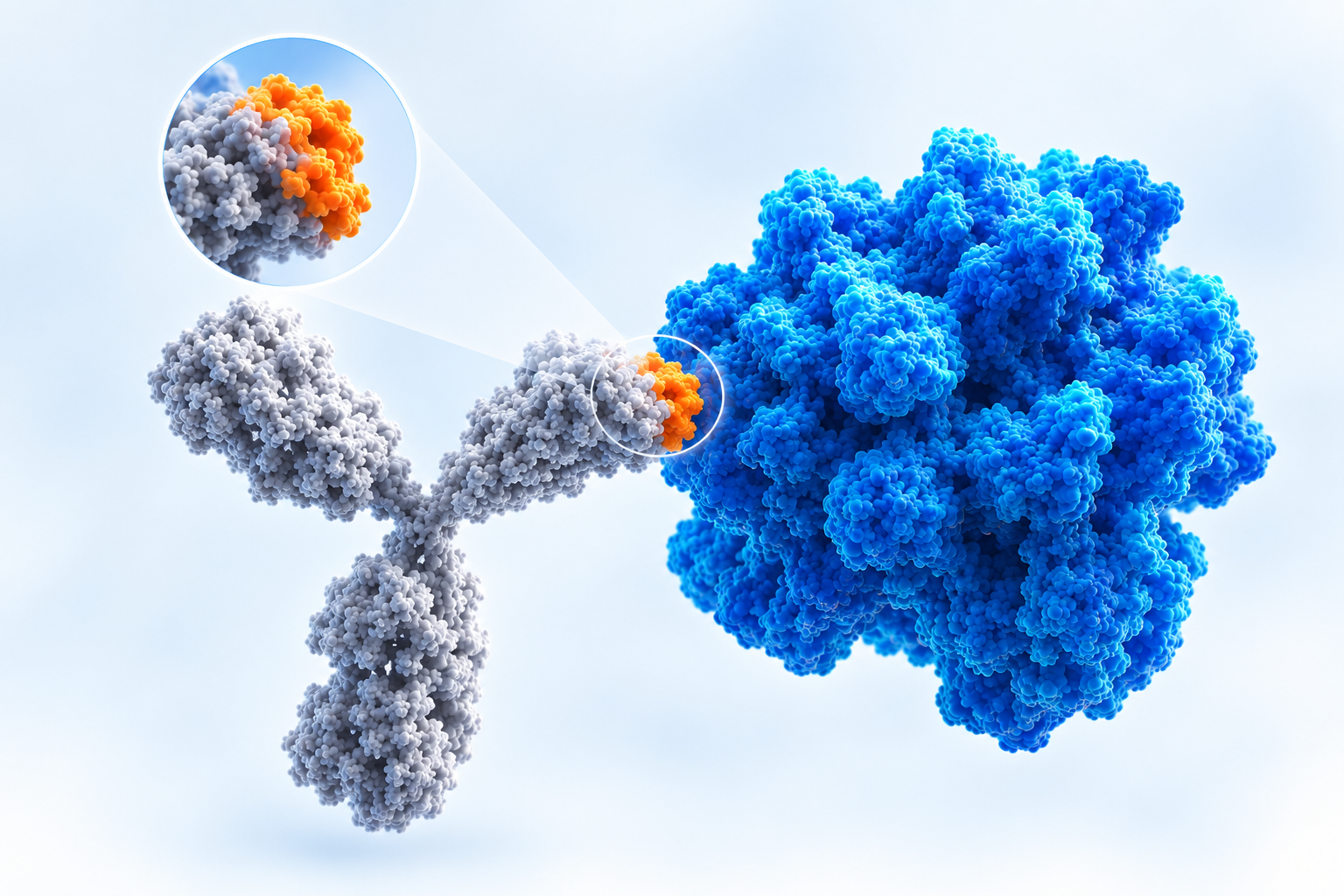
Epitope mapping identifies the region of an antigen that an antibody binds. CovalX maps epitopes by mass spectrometry using HDX-MS and XL-MS, with High-Mass MALDI to verify the protein complex beforehand. This matters for mechanism of action, candidate selection, comparability, and intellectual property.
Related readings:
Epitope Mapping service page
Epitope mapping by Mass Spectrometry: Locating where an antibody binds its antigen
 De Novo Sequencing Antibody De novo sequencing
De Novo Sequencing
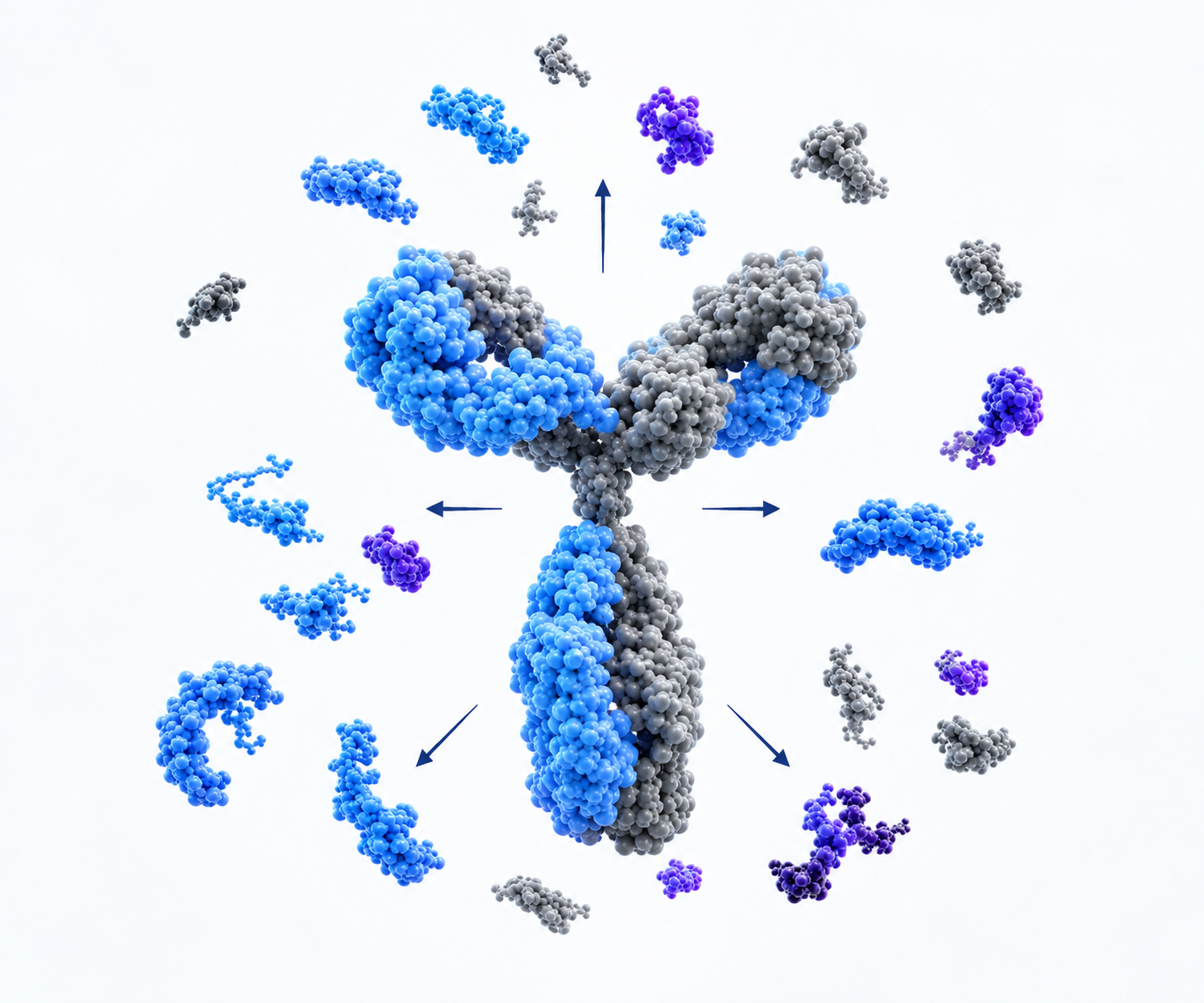
De novo protein sequencing determines a protein’s amino acid sequence directly from mass spectrometry data, without relying on a reference sequence. It applies when the sequence is unknown, incomplete, or needs independent confirmation, for example when characterizing an antibody from a hybridoma.
Related readings:
De Novo Sequencing service page
De Novo protein sequencing by Mass Spectrometry
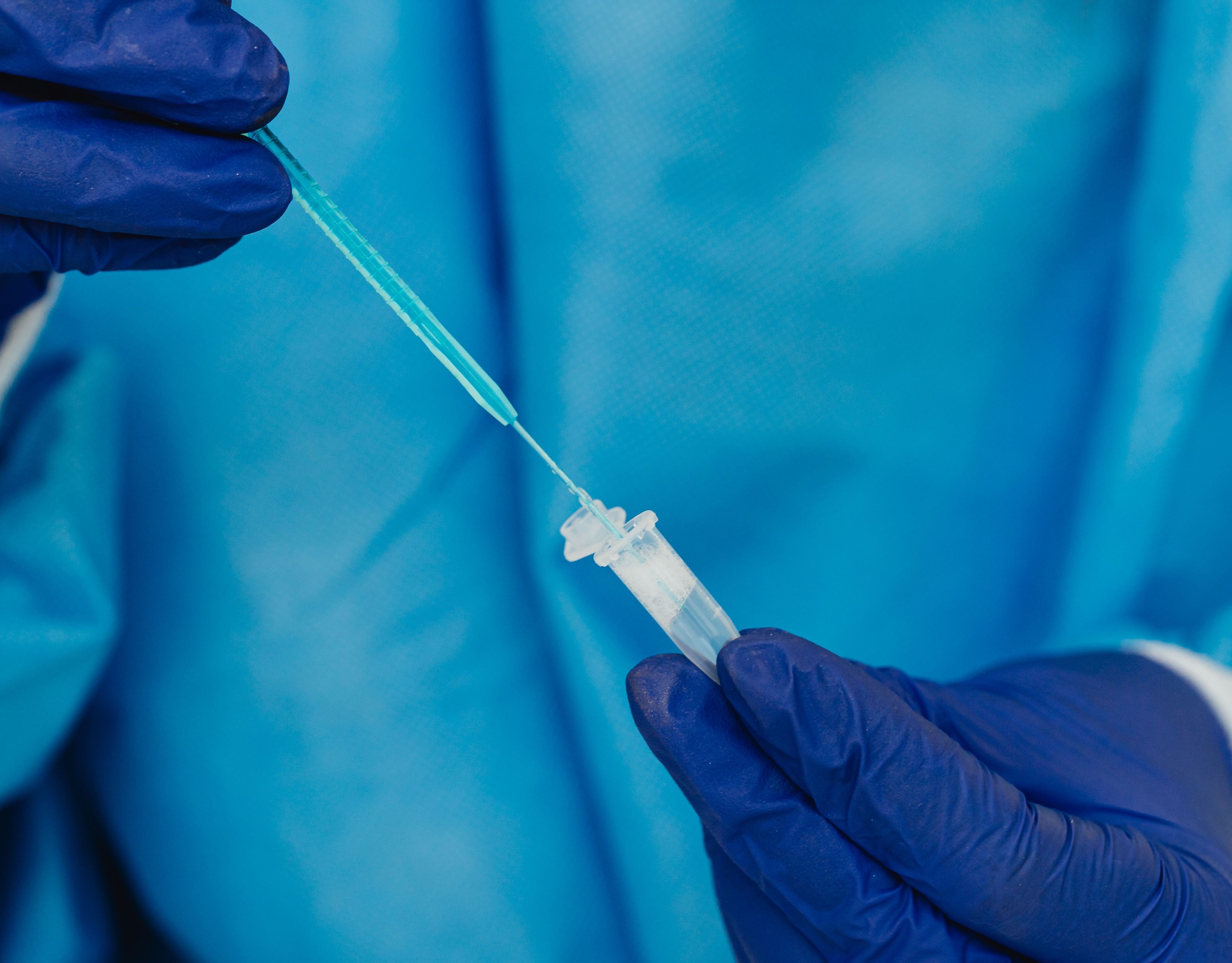 mAb characterization scientist pipeting a monoclonal antibody in a mixture for its characterization
Antibody characterization
Monoclonal antibody characterization measures the identity, integrity, and modifications of a monoclonal antibody, including intact mass, subunit composition, glycosylation, Post Translational Modifications. These measurements support identity confirmation, developability assessment, and comparability.
Go to Ab characterization service page
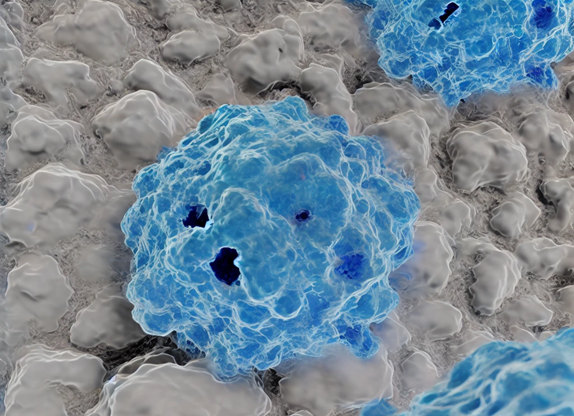 IPMS - Colorized scanning electron microscopy image of immune cells CovalX offers immunoprecipitation mass spectrometry (IP-MS) services to support target identification and protein interaction analysis in drug discovery programs.
Immunoprecipitaion Mass Spectrometry
IP-MS identify which proteins a target engages with. It can be used to isolate a specific protein from a sample containing thousands of different proteins.
Go to Immunoprecipitation Mass Spectrometry service page
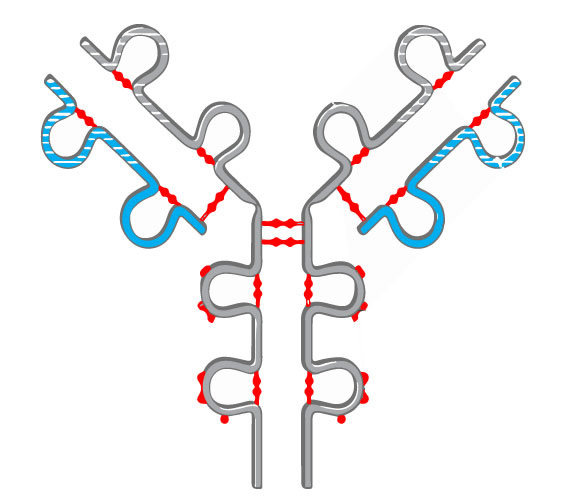 Disulfide bond CovalX offers mAb characterization services by mass spectrometry, including intact LC-MS, MALDI-MS, and sequence verification by PMF for biologics development and QC.
Disulfide mapping
Disulfide mapping determines the location and connectivity of disulfide bonds in a protein. CovalX maps disulfide bonds by mass spectrometry, comparing non-reduced and reduced peptide digests to assign each cysteine pairing and to detect free thiols, scrambled bonds, and trisulfide linkages. Because connectivity affects folding, stability, and function, this supports identity confirmation, comparability, and quality control.
Go to Disulfide Mapping service page
 Biophysical charaterization antibody ready for biophysical characterization
Biophysical characterization
Biophysical characterization assesses the higher-order structure and stability of a protein, using methods such as Differential Scanning Calorimetry (DSC), Circular Dichroism (CD), and Fourier Transfrom Infrared Spectroscopy (FTIR). These methods report on folding, thermal stability, and structural integrity, which influence efficacy and shelf life.
Go to Biophysical testing service page
 CovalX_Host-Cell-Protein CovalX provides host cell protein (HCP) analysis by mass spectrometry to support purity assessment and regulatory compliance in biopharmaceutical manufacturing.
Host cell protein analysis
During the biopharmaceutical production process, host cells can produce their own proteins, which may co-purify with the target protein. HCP analysis enables the detection and characterization of these impurities.
Go to Host Cell Protein Analysis service page
 Affinity Binding of a molecule on an antibody Close view on affinity Binding between a molecule and an antibody
Affinity characterization
Affinity characterization assesses high-accuracy kinetic characterization and fast candidate screening on the same molecule. CovalX offers two complementary methods, Surface plasmon Resonance (SPR) and Bio-Layer Interferometry (BLI).
Go to Affinity: BLI & SPR service page
Which method do you need?
The right method comes from the question. To locate where an antibody binds, epitope mapping applies. To determine an unknown sequence, de novo sequencing applies. To confirm the identity and modifications of an antibody, mAb characterization applies. To assess folding and stability, biophysical characterization applies. Many programs combine several of these, since identity, structure, and function are measured together. Each overview page sets out the methods in its area and how they compare.
Work with CovalX
These pages explain the methods, and answer scientific questions. When you are ready to scope a project, each article links to the matching CovalX service, where you will find deliverables, sample requirements, and contact details. For an overview of the full portfolio, see the CovalX services.