High-Resolution Liquid Chromatography MS Analysis (LC-MS)
Talk to Our Scientists
"*" indicates required fields
High-Resolution LC-MS
Molecular weight confirmation is the first checkpoint in mAb characterization. Before investing in downstream structural analysis, PTM profiling, or comparability assessment, you need to confirm that the molecule is what it is expected to be: correct mass, expected glycoforms, intact chain architecture. Our high-resolution Liquid Chromatography Mass Spectrometry (LC-MS) service provides that information at the intact protein level, directly from the sample in solution, with a resolution of 1 Dalton.
A single project typically encompasses four complementary measurements: the untreated molecule, the deglycosylated form, the reduced chains and the deglycosylated and reduced chains. Together, these give a complete picture of molecular weight accuracy, glycosylation contribution, and light chain/heavy chain integrity.
LC-MS at CovalX
The protein sample is introduced via reversed-phase chromatography, desalted on-column, and ionized by electrospray ionization (ESI). Deconvolution software reconstructs the neutral mass from this charge-state distribution with sub-dalton accuracy.
CovalX runs intact LC-MS on high-resolution Orbitrap instrumentation, which provides the resolving power necessary to distinguish closely spaced proteoforms, glycoforms, and adducts that would be unresolved on lower-resolution platforms. The chromatographic step upstream of ionization reduces salt and buffer interferences that would otherwise suppress or distort the ESI signal.
Four Levels of Analysis

Untreated
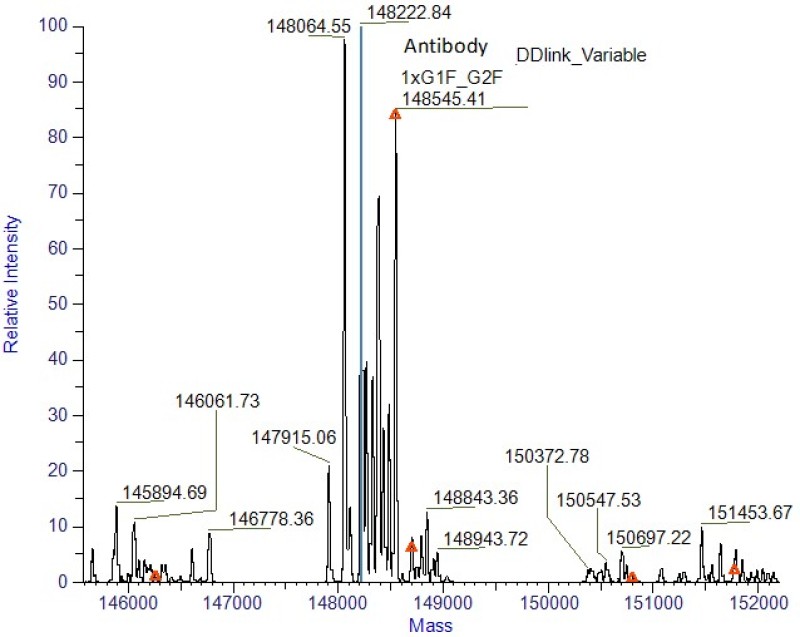
The intact measurement is performed directly on the sample with minimal preparation. It reports the average mass of the molecule as expressed, including all glycosylation and other modifications present. The resulting spectrum reveals molecular weight accuracy relative to the theoretical sequence-based mass and highlights structural heterogeneity from post-translational modifications. This analysis is applicable to proteins and antibodies up to 200 kDa. For larger proteins and non-covalent complexes up to 2 MDa, High-Mass MALDI MS is the appropriate method.
Deglycosylated
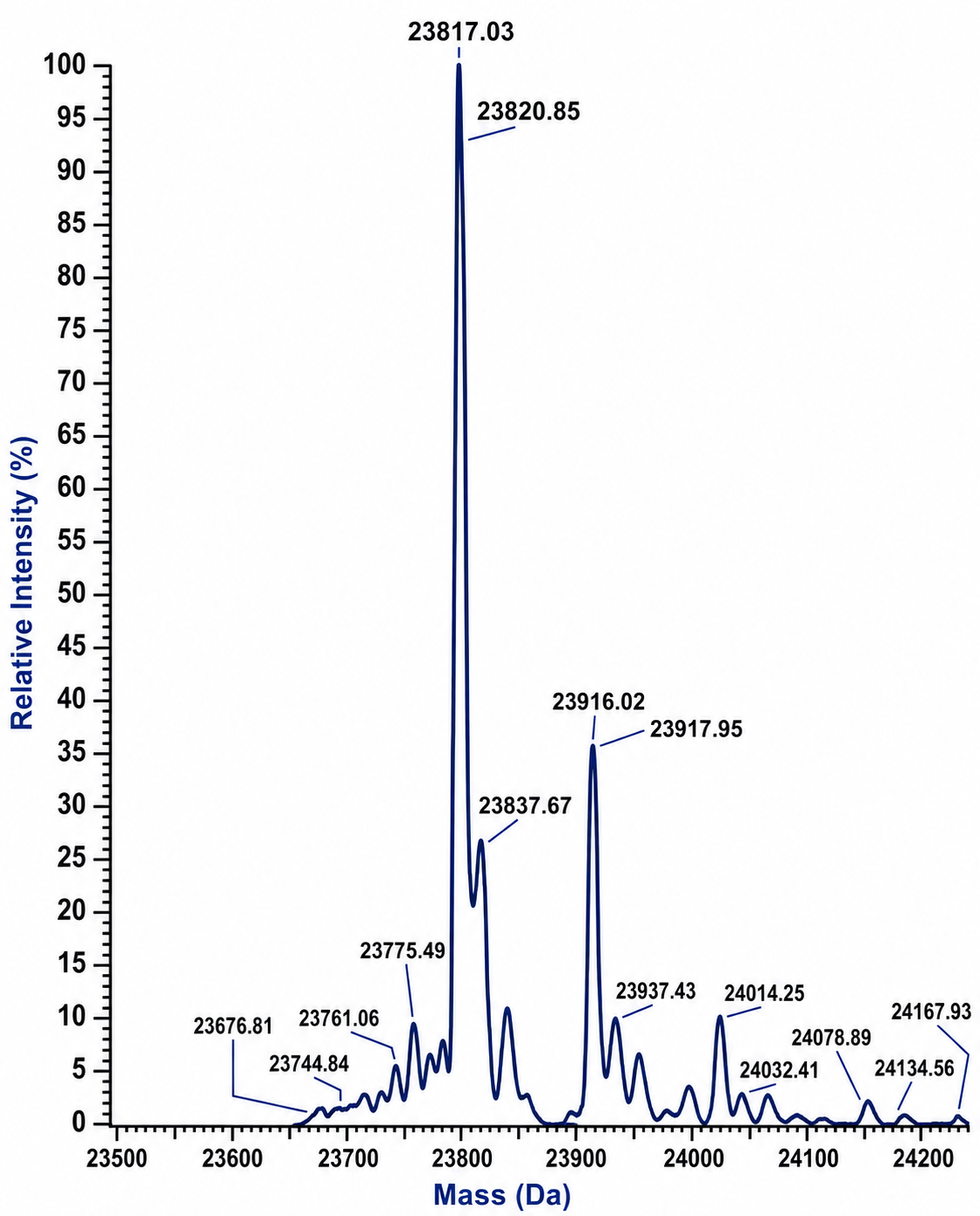
Enzymatic removal of N-linked glycans collapses the glycoform distribution into a single protein peak, giving a direct measurement of the deglycosylated protein backbone mass. This simplifies assignment of the base mass and serves as the entry point for detailed glycan characterization. Further analysis of glycosylation site occupancy and glycan composition requires dedicated glycan analysis workflows.
Reduced
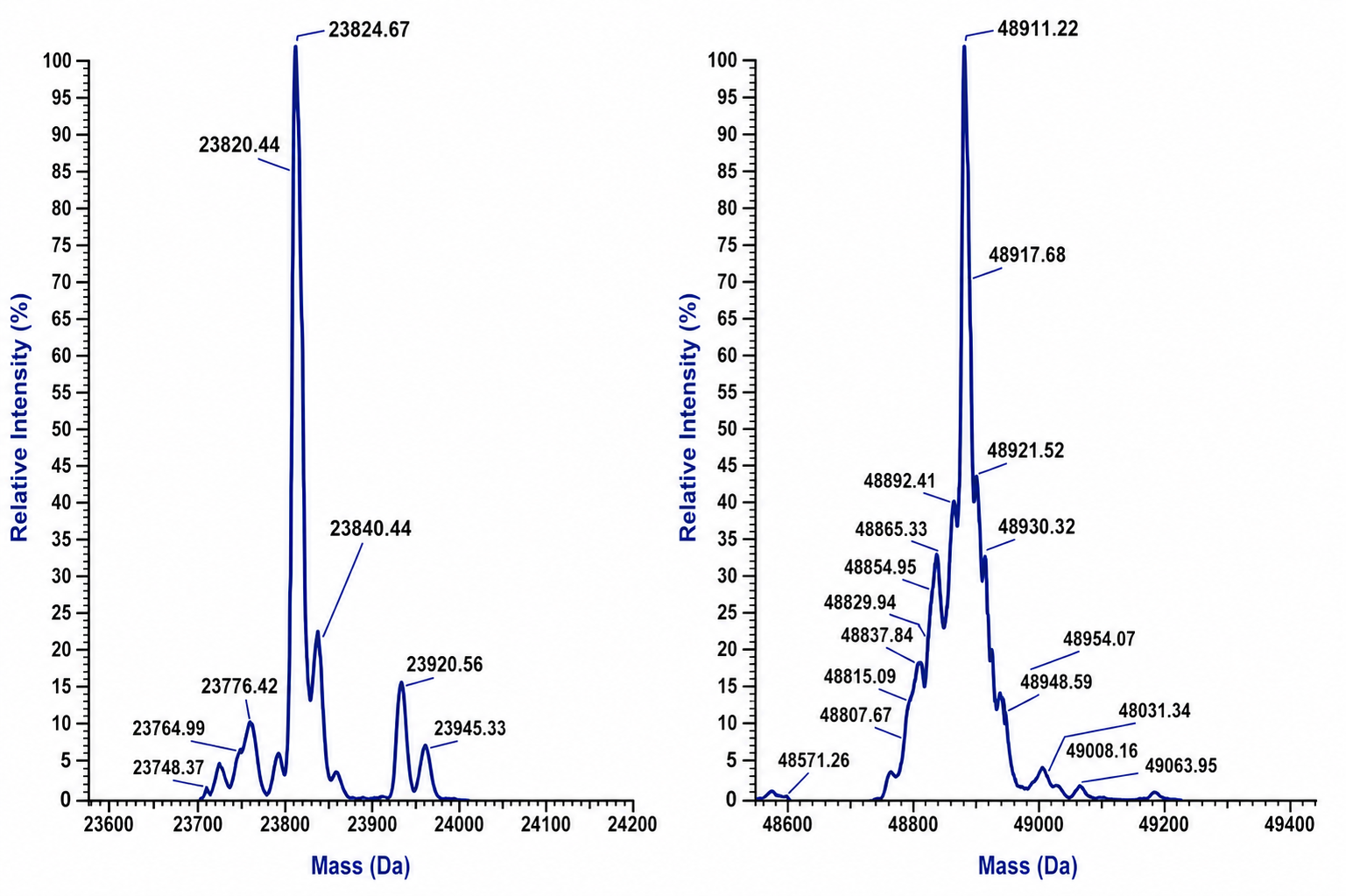
Disulfide reduction separates the light chain (LC) and heavy chain (HC), allowing each to be measured independently. This confirms the individual chain masses against their theoretical values and detects modifications specific to one chain. Combined with the intact measurement, reduced LC-MS provides a complete and precise mass balance for your molecule.
Reduced and Deglycosylated
Combining both treatments removes N-linked glycans and separates the light and heavy chains in a single preparation, giving the cleanest possible mass reference for each chain independent of glycosylation. This measurement isolates modifications intrinsic to the polypeptide backbone, sequence variants, deamidation, oxidation, or C-terminal lysine clipping, that would otherwise be masked or convoluted by glycoform heterogeneity in the intact or reduced-only spectra. It also serves as the definitive baseline against which the theoretical chain masses from the expected sequence are compared, closing the loop on mass balance across all four levels of analysis.
Discuss your project with our team
CovalX scientists evaluate your project with you.
Applications
Batch release and identity confirmation.
Molecular weight verification is a standard release criterion for recombinant proteins and antibodies. Intact LC-MS provides rapid identity confirmation, flagging unexpected mass shifts from sequence errors, incomplete processing, or chemical modification introduced during manufacturing.
Comparability and biosimilarity.
Intact mass profiles, including glycoform distributions visible in the deconvoluted spectrum, serve as a molecular fingerprint for comparability studies between production batches, process changes, or innovator/biosimilar pairs. Mass shifts as small as a few daltons are detectable with Orbitrap-level resolution.
Feed-in to downstream MS characterization.
Intact mass data provides the verified molecular context for downstream characterization: PTM analysis, disulfide mapping, and peptide mass fingerprinting all depend on confirmed sequence and mass as a baseline. Running intact LC-MS first, through the same CRO, avoids re-submitting samples and allows coordinated experimental design.
Technical Notes
Mass range: up to 200 kDa for intact LC-MS by ESI. For proteins and complexes above 200 kDa, High-Mass MALDI MS analysis is available.
Sample requirement: 50 to 100 µg of purified protein at 1 to 2 mg/mL. Sample preparation (concentration or desalting) can be performed upon receipt if needed.
Sample purity: high purity is recommended. The chromatographic separation step accommodates moderate complexity, but significant contaminant loading affects signal quality.
Turnaround: standard projects delivered within one-two weeks.
Deliverable: full written report including deconvoluted mass spectra, mass assignment table, and interpretation of detected species. Raw data available on request.
Regulatory Context
Primary sequence confirmation and molecular weight verification are required elements of physicochemical characterization under ICH Q6B for biotherapeutics submitted to FDA and EMA. Intact mass data generated by high-resolution LC-MS is routinely included in IND and BLA characterization packages as evidence of molecular identity and batch consistency. For biosimilar comparability dossiers, mass spectral fingerprints provide supporting structural evidence alongside other orthogonal methods.
Frequently Asked Questions
What does intact high-resolution LC-MS measure?
Intact LC-MS measures the molecular weight of a protein or antibody directly from the sample in solution. Using ESI and Orbitrap-based detection, it resolves the intact mass and detects heterogeneity from glycosylation, modifications, clipping, or adduct formation. Deglycosylation and reduction experiments extend the analysis to the protein backbone mass and individual chain masses.
What are the sample requirements?
Standard projects require 50 to 100 µg of purified protein at 1 to 2 mg/mL. Sample preparation, including concentration or desalting, can be arranged upon receipt. Buffer compatibility is confirmed at project setup.
What is included in the deliverable?
Clients receive a full written report with deconvoluted mass spectra, mass assignment for each detected species, and interpretation of observed heterogeneity. Raw data is available upon request.
What is the turnaround time?
Standard projects are delivered within one-two weeks. Expedited timelines are available on request.
How does intact LC-MS differ from High-Mass MALDI MS?
LC-MS by ESI provides sub-dalton mass accuracy for proteins up to 200 kDa and is well suited for detecting subtle mass differences between proteoforms. High-Mass MALDI MS extends the mass range to 2 MDa and is particularly relevant for large proteins and non-covalent assemblies. Both methods are available at CovalX and can be coordinated within the same project.
Which regulatory submissions include intact mass data?
Under ICH Q6B, molecular weight confirmation is a required element of physicochemical characterization for biotherapeutics in IND and BLA submissions. Intact mass profiles are also included in biosimilar comparability dossiers accepted by FDA and EMA.
One CRO, Coordinated Data
High-resolution LC-MS is part of CovalX’s mAb characterization portfolio. The mass data generated here feeds directly into subsequent analytical steps: PTM analysis, glycan profiling, disulfide mapping, and sequence verification by peptide mass fingerprinting. Running these analyses through a single CRO reduces sample handling steps, keeps the molecular context consistent across experiments, and consolidates reporting into a single deliverable.
For programs requiring higher-mass measurement, High-Mass MALDI MS is available in-house for intact proteins and non-covalent complexes up to 2 MDa. Both methods can be scoped within the same project engagement.