Epitope Mapping Services
Talk to Our Scientists
"*" indicates required fields
Defining where a therapeutic antibody binds its antigen determines what the molecule does and where it sits in a competitive landscape. That information shapes lead selection, patent positioning, and mechanism-of-action claims. Getting it right, early, matters.
CovalX offers two complementary MS-based epitope mapping services: Hydrogen-Deuterium Exchange MS (HDX-MS) and Cross-Linking MS (XL-MS). Both begin with an intact protein quality control step using High-Mass MALDI MS, which confirms antibody integrity, detects aggregates, and verifies complex formation before mapping experiments begin. This upstream screening is integrated into every project and is specific to CovalX’s workflow.
Choose the approach that fits your question
HDX-MS Epitope Mapping
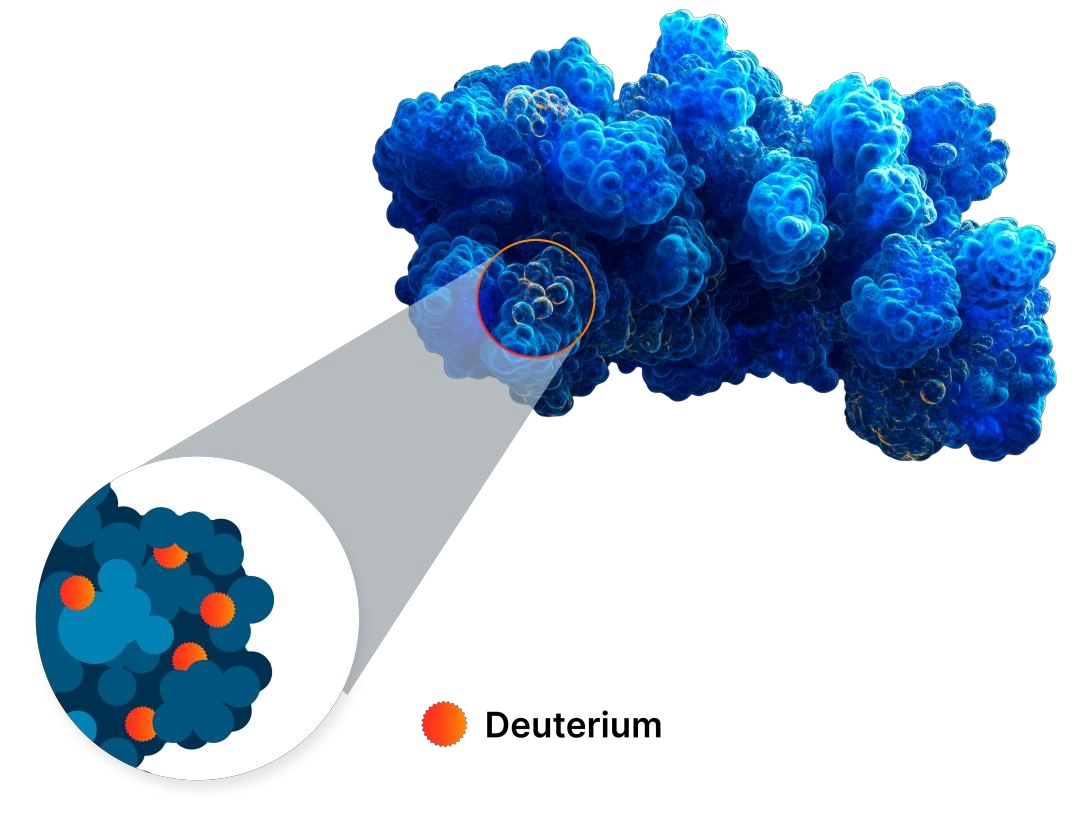
HDX-MS maps binding sites by measuring solvent protection: regions of the antigen that exchange hydrogen for deuterium more slowly in the presence of the antibody identify the contact interface. The method is differential by design, comparing deuterium incorporation between antigen alone and the antibody-antigen complex. It resolves linear and conformational epitopes in solution, under native conditions, and detects allosteric conformational changes induced by binding.
XL-MS Epitope Mapping
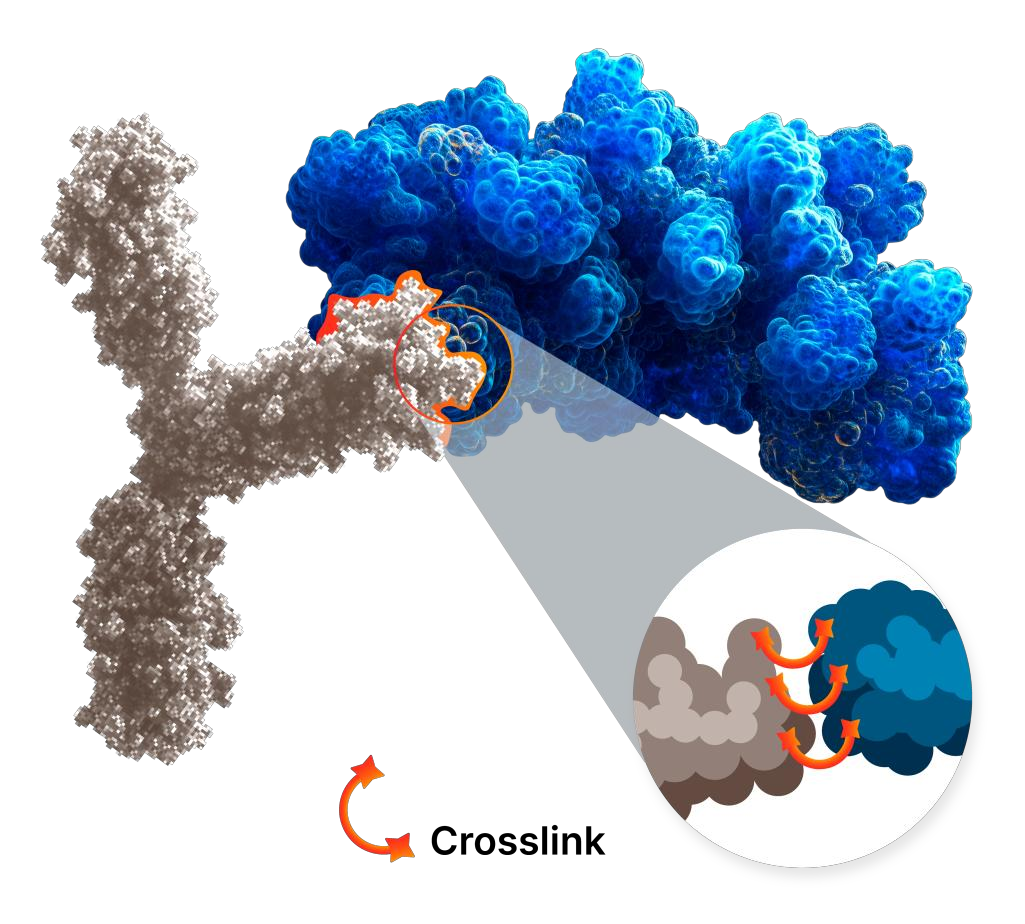
XL-MS maps the epitope by covalently fixing proximity. A bifunctional crosslinker reacts with residues within a defined spacer distance, locking the complex in its native conformation. Proteolytic digestion and nLC-MS/MS analysis identify which residue pairs from the antibody and antigen were in contact.
XL-MS is applicable to complexes that are not tractable by crystallography or cryo-EM, including unstable heterodimers, large assemblies, and proteins that aggregate under sample preparation conditions.
Not sure whether HDX-MS or XL-MS fits your project?
Contact us and we’ll assess your sample and objectives.
Integrated Workflow
All epitope mapping projects at CovalX begin with High-Mass MALDI MS analysis of the intact proteins and non-covalent complexes in equilibrium. This step confirms antibody integrity, identifies aggregation, verifies antigen multimerization state, and confirms complex stoichiometry before any mapping experiment begins. It is a quality control step that reduces failure rate in downstream mapping and is specific to CovalX’s service design.
CovalX has over two decades of experience in protein complex analysis by mass spectrometry and operates the latest HDX-MS automation, LC systems, and data analysis software.
When to use epitope mapping
Epitope mapping is relevant at multiple stages of antibody development: during lead selection to differentiate candidates targeting distinct binding sites; during mechanism of action studies to confirm engagement; during biosimilar development to provide structural comparability evidence; and in patent prosecution to define binding site claims.
The choice between HDX-MS and XL-MS depends on the question, the antigen structure, and whether dynamic or spatial information is the priority.
Our team can advise on study design before project initiation.
Read more about epitope mapping by mass spectrometry